
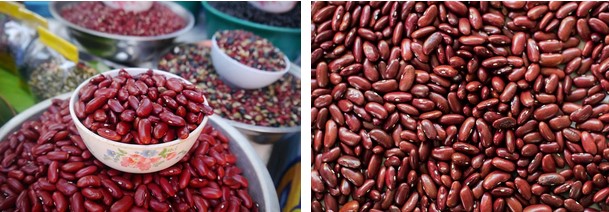
COMPREHENSIVE GUIDE TO RAJMAH (KIDNEY BEAN) IN PUNJAB
Dr. Navjot Kaur Dhillon
Pulses Section, Department of Plant Breeding & Genetics, PAU, Ludhiana
Email: [email protected]
Phone: 8360943171
Rajmash (Kidney beans) have become famous all over the world due to its health benefits as well as their savory texture. Its are termed as “King of Nutrition” due to its nutritional quality and market demand.
Rajmash was not traditionally a major crop in Punjab due to climatic and institutional focus on rice-wheat systems. Punjab continues to struggle with pulse area expansion compared to staples, but successful models progressive farmers in districts like Amritsar and Gurdaspur and few at Fatehgarh Sahib districts are now successfully growing it, proving its potential in the region and showing viable diversification pathways. These local successful models show good net incomes within a short crop cycle (3 months). Rajmash can fit well between basmati (June–Oct) and potato (Oct–Jan) in diversified systems, helping reduce rice-wheat reliance. As a legume, rajmash fixes nitrogen naturally, improving soil fertility for subsequent crops like basmati and potato. Rajmash crop is very sensitive to frost, excess heat above 30–35°C, and waterlogging. Therefore, Punjab’s spring (Feb–Apr) rabi window offers a suitable period with cooler nights and moderate days. Local farmers sow in late Jan to mid Feburary. Ideal temperature range: about 15°C to 30°C is good for crop growth. The crop is sensitive to water stagnation. Well-drained loamy to medium soils with good tilth and organic matter are preferred. Avoid heavy clay soils with poor drainage. Ensure level fields to prevent waterlogging. Ploughing 2–3 times is done to achieve fine soil tilth and thereafter adding well-decomposed farmyard manure (60–80 q/acre) during final tillage. It is very sensitive to saline soils. Gives best result when pH of soil is 5.5 to 6. Spacing of 45-60 cm between rows and 10-15 cm between plants is ideal for rajmash growth. Seed rate of around 30–35 kg per acre depending on spacing and seed size. For pole type varieties sown at distance of 1 m in hill @3-4 plant per hill with seed rate of 10-12kg/acre. Seeds are sown at depth of 6-7 cm.
Unlike paddy or wheat, rajmash prefers controlled irrigation, avoiding excess water. Farmers report 5 or so controlled irrigations from sowing to flowering, with careful moisture management. Rajmash maturity is generally attained in 90–110 days after sowing, depending on variety and weather. Harvesting is done when plants turn yellow and pods dry. Pods are dried post-harvest and threshed for seed/bean recovery. Farmers have reported 9 quintals/acre under good management.
Common issues include insects like aphids and pod borers, and diseases such as angular leaf spot — general pulse management practices apply. Integrated pest management (IPM) and timely foliar sprays (based on advisory) help control pests. Rajmash encounter climatic risk of frost and extreme heat which can reduce germination and yield. Rajmash is potentially profitable alternative crop in rotation systems. With good extension and Market support, a strong local marketing and seed chain can be scaled up.
( COMPREHENSIVE GUIDE TO RAJMAH (KIDNEY BEAN) IN PUNJAB )
